In this article
TL;DR
How to measure brand awareness: ask unaided recall first, then top-of-mind and aided awareness, then open-ended association questions to the same participants, and repeat the same questions every wave. Recall scores confirm people know your brand exists. Association questions show what the brand means to them, and they catch the cases where rising awareness rests on the wrong associations.
Best for: brand teams who cannot explain their rising awareness.
Best for: researchers adding association questions to a brand recall tracker.
Best for: leaders proving a score reflects intended positioning.
Most brand teams can report whether awareness moved. Far fewer can say what people now associate with the brand, and that second answer is the one that shapes the next campaign brief.
This guide is for brand, marketing, and innovation teams whose marketing strategies have to be defended with evidence. It covers:
What each of the key brand awareness metrics can and cannot tell you
How to pair recall with association questions
The judgment calls no dashboard makes for you
Why rising brand awareness scores can still mean you're losing
Learning how to measure brand awareness usually starts with a tracker, and after a year of work to increase brand awareness, the tracker delivers good news. Unaided recall climbed again this quarter, but when leadership asks which associations drove the gain, the brand team has no answer.
That gap is the central tension in awareness measurement. Brand awareness is important because a brand nobody recalls rarely gets chosen, yet aided and unaided recall questions were built only to confirm whether people know a brand name and how familiar consumers are with it. They were never built to capture what that name means to the person recalling it, or what the brand stands for in their mind.
So the "why" behind the score never gets collected. Without a qualitative layer attached to the same participants, the team can only infer what drives the number. Usually that inference comes from internal assumptions about what the latest marketing campaign was meant to say.
The cost is a decision made before the explanation arrives. A rise in awareness gets reported as a win by default; the next media plan is briefed on that reading, and the associations behind the score only surface later.
A brand positioning on craft and provenance can gain brand recall because people remember a pricing controversy. The tracker records both as the same upward line, and by the time anyone knows which one moved, the brand awareness investment is already committed.
The team then keeps funding marketing efforts that are quietly pulling the brand image away from its intended position, and pays for it later in wasted media spend. It is the same pattern behind why marketing campaigns miss the mark: the brief is set before the reason arrives. Nobody decided to drift. The measurement made the drift invisible. Conveo's position is that awareness tracking needs an always-on qualitative layer, so drift shows up while the team can still correct it.
"I don't think it's the case anymore that doing research has to be this big investment in time and money — mainly time — this chore that slows everything down. I think it can be a resource that you can just, and should just, tap into constantly and frequently as you're making decisions."
Matt Harris, Research & Insights Lead, Canva
Question order adds a second risk. When a brand awareness survey shows a brand list before asking for unprompted recall, the list primes memory and inflates the unaided result. The headline number then overstates mental availability and hides how far brand perception has moved.
Awareness, recall and association: what each metric actually measures
Teams asking how to measure brand awareness often expect one metric to answer four different questions. Unaided awareness, aided awareness, top-of-mind awareness, and association each measure something distinct, and blending them into one brand health score hides the movement a brand team most needs to explain. For how these metrics fit into a wider program, see our guide to brand health tracking.
Understanding brand awareness as a spectrum helps. The brand awareness spectrum runs from brand recognition at the low end, through unprompted recall, to top-of-mind awareness at the top, with association running alongside it as the explanation.
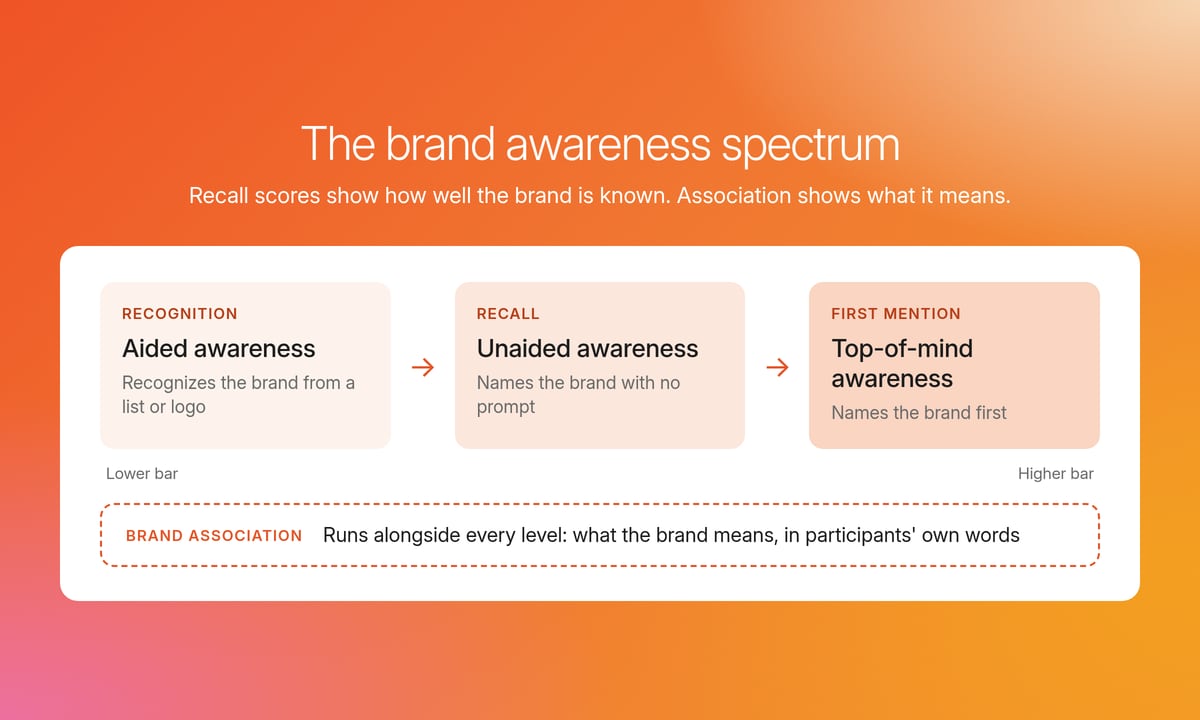
Unaided awareness is the share of participants who name your brand, without any prompt, when asked about a category. Unaided awareness measures whether the brand lives in memory on its own. It cannot tell you why the brand is there or what it stands for.
Aided awareness is the share of participants who recognize your brand when shown a list or logo. Aided brand awareness measures recognition, which is a lower bar than recall. Ask it after unaided awareness, because showing a brand list first primes memory and inflates the unaided result.
Top-of-mind awareness is the first brand a participant names, unprompted, in a category. That order signals mental availability at the moment of purchase, which matters more than recognition when potential customers are choosing. It still says nothing about whether the brand comes to mind for the right reasons.
Brand association is what participants connect to your brand in their own words: attributes, emotions, experiences, and the target audience they think the brand is for. Brand association is the only one of the four awareness metrics that captures meaning, and it is where the brand identity a team intends and the brand image consumers hold either match or split apart. It requires open-ended questions, because closed scales return only the attributes the team already chose to test.
| Metric | What it tells you | What it misses | How to ask it |
|---|---|---|---|
| Unaided awareness | Whether the brand lives in memory on its own | Why the brand is there or what it stands for | Ask first, with no list, logo, or hint |
| Top-of-mind awareness | Mental availability at the moment of purchase | Whether the brand comes to mind for the right reasons | Record the first brand named in the unaided prompt |
| Aided awareness | Whether people recognize the brand from a list or logo | Whether people recall the brand without a prompt | Ask only after unaided recall is captured |
| Brand association | What the brand means to people, in their own words | How widely the brand is known, so pair it with recall scores | Open-ended and projective questions, before any prompted list |
Survey metrics also sit alongside behavioral signals of the brand's visibility:
Branded search volume in Google Search Console or Google Trends shows how often people look the brand up on search engines.
Direct traffic in Google Analytics counts the share of website traffic that arrives by typing the URL.
Brand mentions on news sites and social media platforms show how widely the brand is discussed.
These signals confirm the brand's presence, but like recall, they cannot show what the brand stands for. Read alone, they turn into vanity metrics.
The first three metrics are quantitative, and they confirm whether awareness moved. None of them reveal which associations, emotions, or experiences caused the shift.
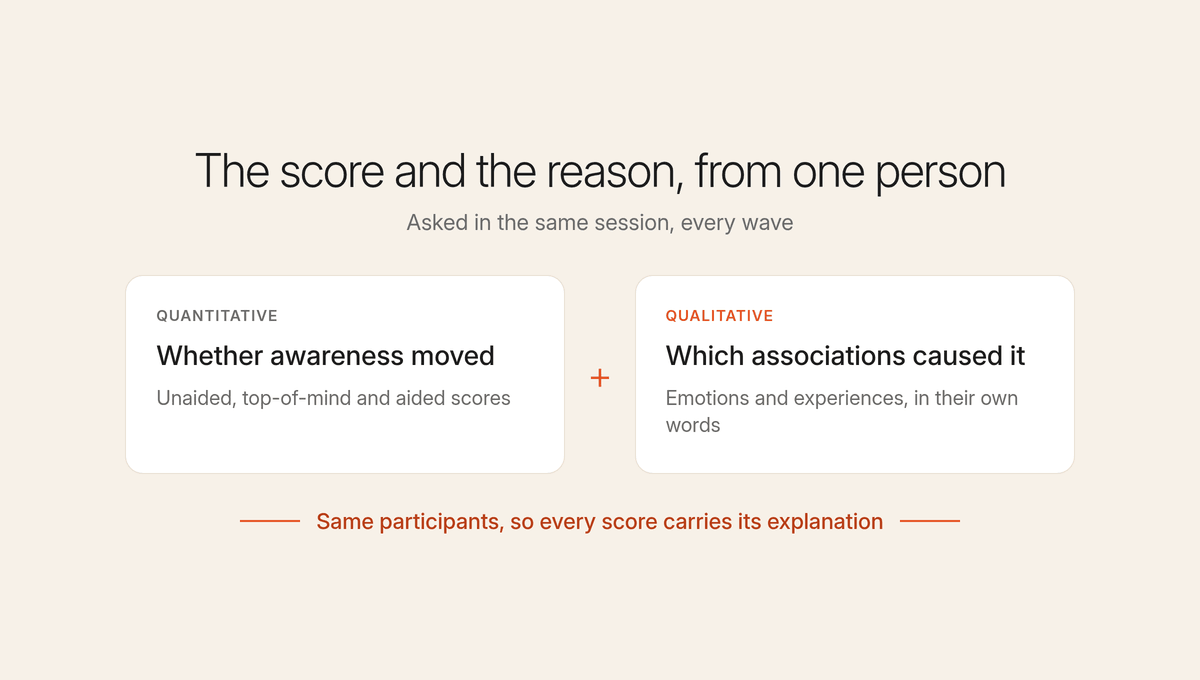
That is why the association layer has to sit with the same participants who answered the recall questions. Each score then carries its own explanation, instead of one inferred weeks later from a separate market research study with different people. Conveo is built on this principle: the number and the reason come from the same person in the same session.
A step-by-step framework for measuring brand awareness and the associations behind it
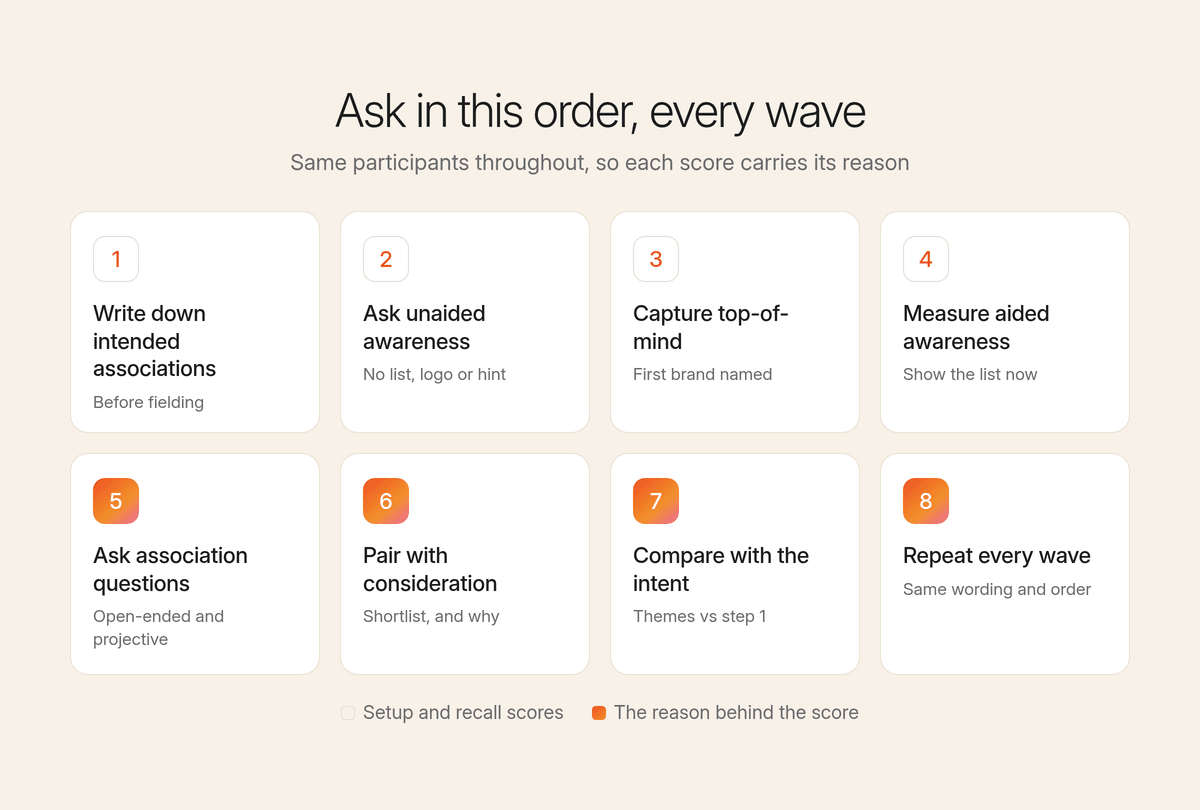
Here is how to measure brand awareness so every score arrives with the associations behind it. Run these brand awareness survey questions against your existing tracker, in order, with the same participants throughout. The sequence matters as much as the questions, because each step protects the one after it. For wording on the open-ended steps, see these brand perception survey questions.
Write down the associations you intend to own. Before fielding, list the three to five associations the positioning is meant to create in your target market, in plain language, so the intended brand identity has a written reference point. Without this baseline, nobody can judge later whether a rising score reflects the intended story or a different one.
Ask unaided brand awareness first. Ask participants to name brands in the category with no list, logo, or hint on screen. Placing this before any aided question keeps the brand list from priming brand recall and inflating the score.
Capture top-of-mind awareness from the same prompt. Record which brand each participant names first, separately from the full unaided list. First mention is a direct signal of mental availability at the moment of purchase, which brand recognition alone cannot show.
Measure aided brand awareness only after unprompted recall is captured. Show the brand list or logos now and record recognition. The gap between aided and unaided results shows how much of your awareness depends on a prompt.
Layer open-ended association and projective questions into the same session. Ask them to describe the brand, who it is for, and what it would be if it were a person, in their own words. This is where you see whether the brand resonates with the people it was built for. Because the same people answered the recall questions, the "why" behind each score gets collected instead of inferred later.
Pair awareness with consideration. Brand awareness helps only when it earns a place on the shortlist, so ask whether the brand would make theirs for the next purchase, and why or why not. In complex customer journeys, recognition and choice can sit months apart. This question shows whether recognition is moving potential customers down the marketing funnel into active purchase decisions or stalling at familiarity.
Compare what participants said against your intended associations. Code the open-ended answers into themes, count how often each appears, and set them beside the intended associations written down in step 1. Matches confirm the positioning is landing, and gaps show where consumer perception has moved away from the brief while the score rose.
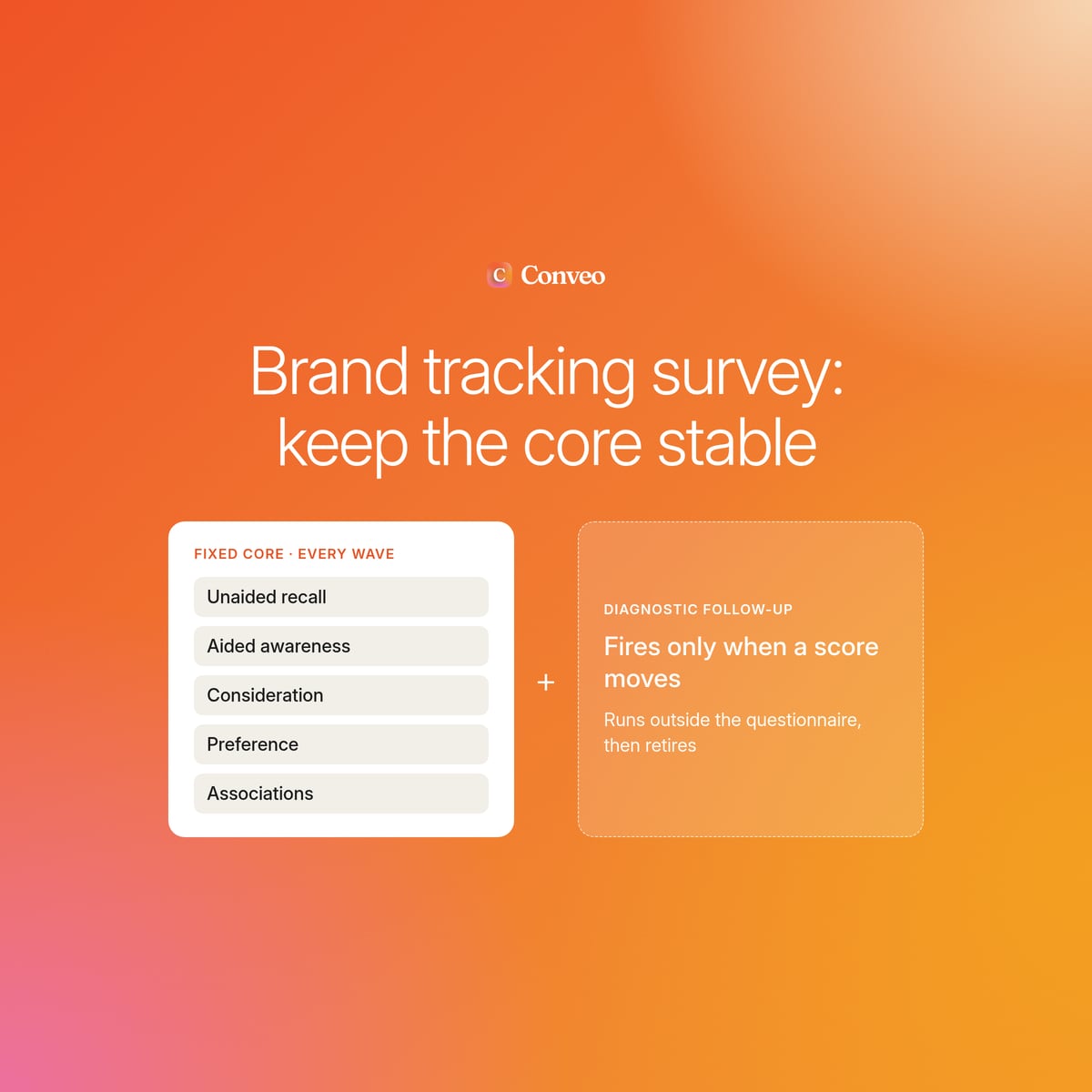
Repeat the same questions at regular intervals. Keep wording, order, and brand awareness KPIs identical across waves so changes reflect the market rather than the questionnaire. Trend lines reveal the effects of specific marketing campaigns, launches, and competitors that a single snapshot cannot, and they show whether associations are moving with the score.
Where researcher judgment still decides what the numbers move
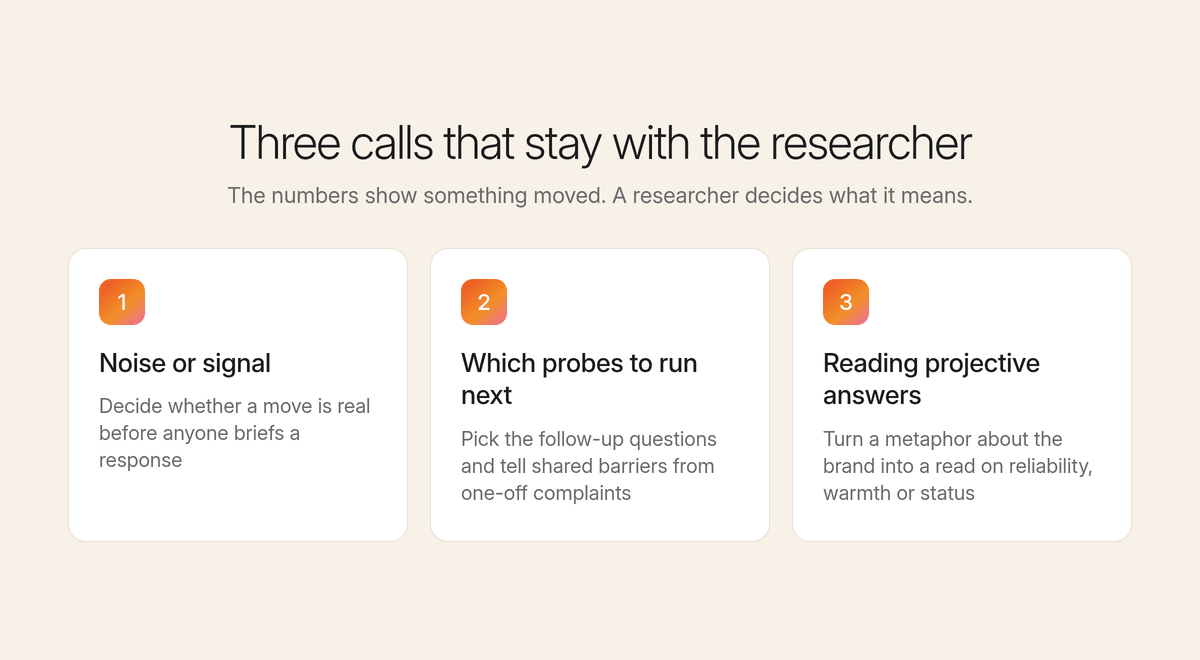
No framework decides which signal deserves action. Measuring brand awareness helps a team see that something moved, with clean, comparable numbers. A researcher still has to interpret unexpected movement before anyone briefs a response.
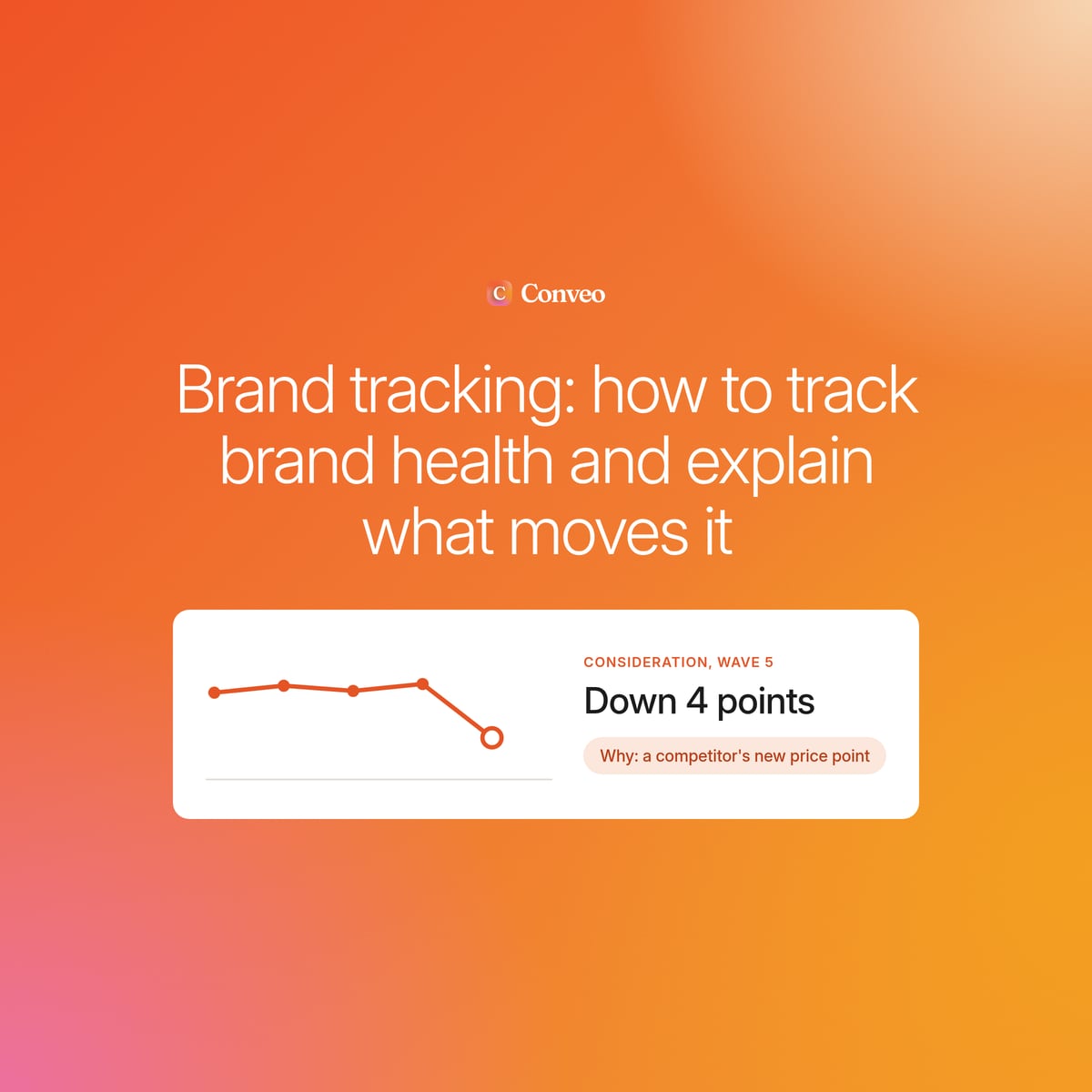
Judgment call 1: noise versus signal. A four-point decline in consideration identifies movement. The metric alone cannot distinguish competitive pressure, a marketing campaign that failed to land, pricing concerns, or statistical noise. Treat that movement as a trigger for focused qualitative market research, and hold the brief for the next round of brand awareness activities until the cause is clear.
Judgment call 2: which open-ended probes to run next. Two questions earn their place in most follow-ups:
What triggered your last switch consideration?
What would need to change for you to choose this brand over your current option?
Answers from loyal customers, brand advocates, and recent switchers often point in different directions. A researcher decides which answers point to a real barrier shared across the sample and which are isolated complaints that would send the team chasing the wrong fix.
Judgment call 3: reading emotional and projective responses. Projective questions surface associations participants struggle to put into direct feedback or ratings, such as describing the brand as a guest who always arrives late. A dashboard cannot score that answer, and a rubric flattens it. Trained interpretation turns it into a usable read on reliability, warmth, or status, in the context of the category and the brand's history.
Teams can collect these conversations at scale and see them organized into themes through AI-moderated research. Deciding what they mean, and what the team does next, stays with the researcher. That division of labor is the design principle behind Conveo: AI-moderated interviews carry the operational work, and the researcher shapes the design and interprets the findings.
Brand awareness measurement in practice: 3 scenarios
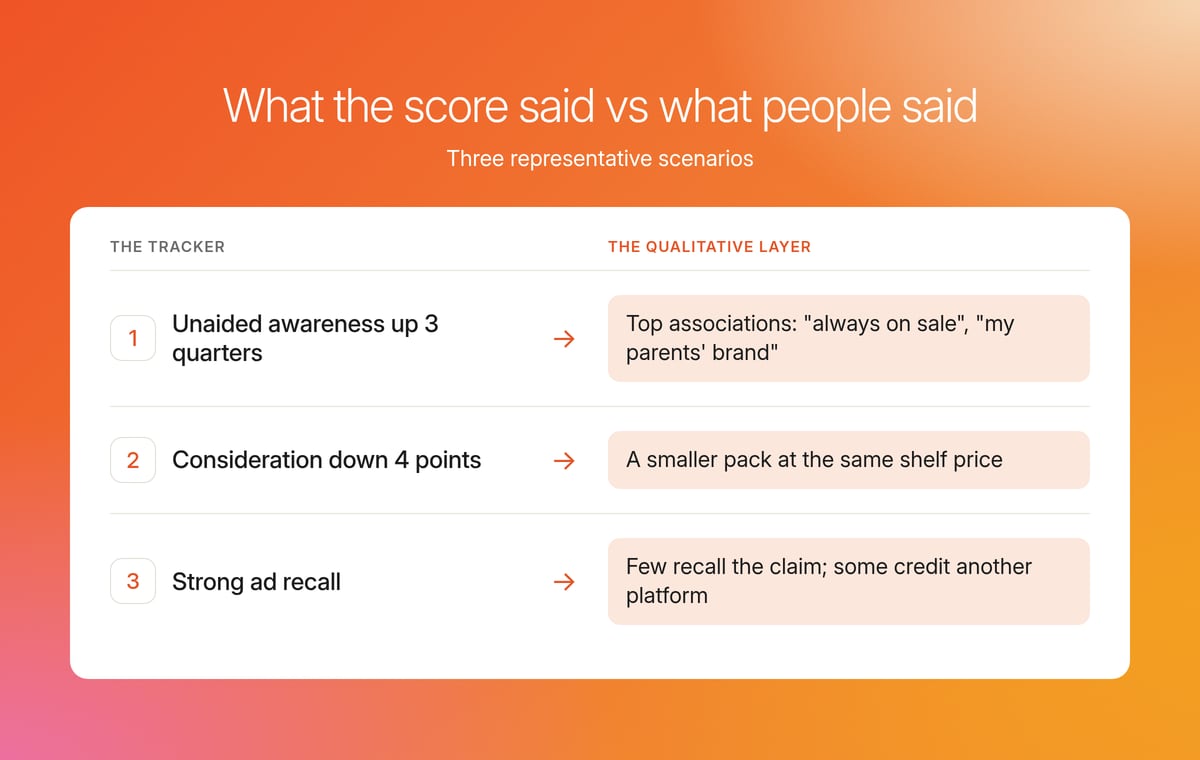
These three scenarios show how to measure brand awareness in practice. In each, a quantitative signal moves, and a qualitative layer explains what the number could not. For how teams test whether positioning is landing, see our guide to brand positioning research.
1. Awareness climbs, positioning drifts
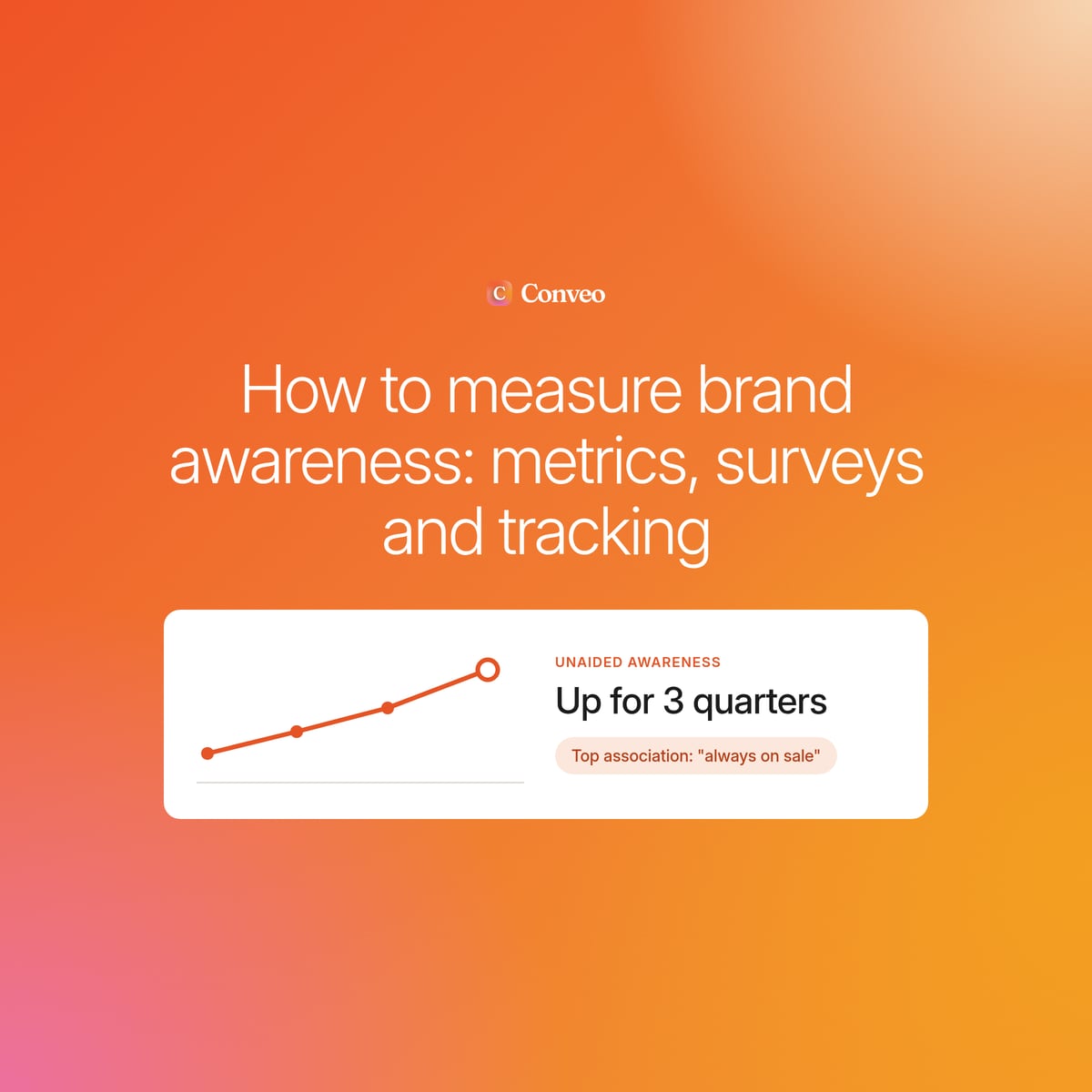
The signal: In a representative scenario, a home appliance brand sees unaided awareness rise for three straight quarters after brand awareness campaigns built around premium engineering. Leadership reads the trend, along with rising branded search volume, as proof the premium story is landing, and the next quarter's marketing efforts double down on it.
What the qualitative layer showed: The team then asks those respondents to describe the brand in their own words, before showing any list. The dominant associations are "always on sale" and "my parents' brand." Several participants mention a promotion they saw at a retailer or on social media channels, and nobody mentions engineering. The awareness gain was real, but the brand image behind it was not the one the campaign paid for.
Takeaway: a rising score needs association evidence from the people who produced it before anyone calls it a win.
2. Consideration drops with no explanation
The signal: In a representative scenario, a snack brand's tracker shows consideration down four points while awareness holds flat. The topline and market share data support three stories (competitive pressure, pricing, or a weak campaign) and offer no way to choose between them.
What the qualitative layer showed: A follow-up asks participants what triggered their last switch consideration and what would need to change for them to choose the brand again. Most describe a smaller pack at the same shelf price, noticed in store weeks before the tracker wave, and several long-time buyers say it shook their brand loyalty. Few mention the competitor's new launch, and almost nobody mentions the campaign. That points to pricing, so the fix belongs with revenue management instead of the creative agency.
Takeaway: a decline without a reason is an open question, and the follow-up conversation answers it before budget moves.
3. The campaign scores well and says the wrong thing
The signal: In a representative scenario, a streaming service runs a brand campaign to create brand awareness for a new tier, and its tracker reports strong ad recall. On the numbers, including a spike in brand mentions, the campaign succeeded and the brand awareness ROI case looks settled.
What the qualitative layer showed: A post-campaign check asks participants what they remember from the last brand ad. They describe the soundtrack and a celebrity cameo accurately, but few can say what the ad claimed about the service. Some attribute the core message to a different platform entirely. The tracker would have logged a success, and the next campaign would have repeated the same creative approach.
Takeaway: media recall and message recall are separate metrics, and only message recall tells a brand team whether the campaign moved perception.
See how brand teams pair recall with associations.
9 common mistakes that make brand awareness metrics misleading
Most brand awareness measurement errors end the same way: a score rises, the brand team cannot explain what is driving it, and the link to business success stays a guess. Each mistake below creates that gap, and each comes with a quick fix.
Asking aided awareness before unaided. The brand list primes recall and inflates the score, so capture unprompted recall first.
Reporting the topline without an intended-association baseline. Write down the associations the positioning should create, or no one can judge whether growth is on-strategy.
Testing only the attributes the team already chose. Closed scales return internal language like "innovative" or "trusted," so ask open-ended questions before any list.
Relying on generic satisfaction and NPS questions. They confirm an attitude exists without revealing what created it or what drives brand loyalty, so ask what would change it.
Treating the brand's visibility as proof of positioning. Rising web traffic, social media engagement, or direct traffic growth shows reach, so pair it with association evidence before those numbers become vanity metrics.
Running qualitative work on a different sample. Other people's explanations cannot be matched to the scores, so ask the score and the reason in the same session, or recruit the follow-up from the same respondents where your panel allows it; see participant recruitment in qualitative research.
Treating an annual or biannual tracker as current. A six-month-old study may not reflect today's market, so add trigger-based checks between waves.
Changing question wording between waves. Shifts then reflect the questionnaire instead of the market, so lock wording and order across every wave.
Averaging across segments. A flat total can hide rising awareness in one target audience and decline in another, so read results by segment.
Each fix asks the same thing of the program: keep the key metrics, and make them explainable by the people who produced them. Conveo applies that standard: each theme links to the participants behind it, with video clips and verbatim quotes stakeholders can audit.
Why pairing awareness tracking with AI-moderated interviews closes the gap
The fix is structural. The reasons behind a score have to come from the same participants who produced it. A separate study run weeks later explains a different sample in a different market moment.
Tracking and qualitative depth close the gap only when they run together, every wave. Quantitative tracking shows whether awareness moved. Qualitative interviews explain which associations, emotions, and experiences caused the change in consumer perception.
In practice, the pairing runs like this:
The brand team keeps its tracker questions and order.
The recall questions are asked inside the Conveo video conversation, so the count and the reason come from the same participant. Teams that want to follow up with an existing sample can bring their own participant list instead.
Conveo's AI research assistant asks follow-up questions when an answer is vague or leaves a gap, building on what the participant said earlier.
Each theme links to the participants behind it, with video clips and verbatim quotes stakeholders can audit.
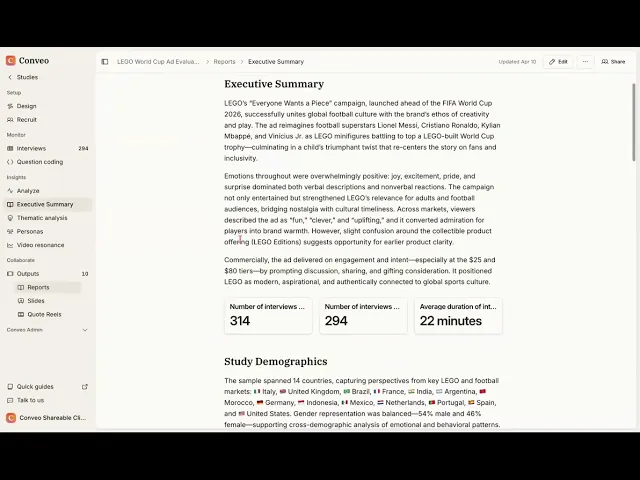
Recurring themes and facets are recognized across studies in a searchable insight library, so the next wave starts from what earlier ones established instead of a blank codebook. The team sees associations and brand performance shift over time instead of rebuilding the picture every quarter, which is how to track brand awareness without losing the reasons behind it.
Conveo StoryLines keeps that qualitative layer always-on. It runs in recurring waves, for example every two weeks or monthly, so the associations that are moving surface before the next decision is briefed. With StoryLines V2, each wave opens on the signals that moved since the last wave and the shifts that explain them, in participants' own words.
Three capabilities let a program reach a wider audience without a separate study for each market:
Interviews run in parallel across markets and time zones
Video conversations in 50+ languages, led by Conveo's AI research assistant
Recruitment through 8 integrated panel providers, plus your own participant lists
Findings arrive while the decision is still open, so the explanation reaches leadership before the next brief is locked.
The implication for brand teams: a rising score arrives with evidence that efforts to build brand awareness are adding to brand equity.
Frequently asked questions
How do we measure what people actually associate with our brand, not only whether they recognize the name?
Measuring brand awareness beyond brand recognition means adding open-ended association questions answered in each participant's own words. Ask them to describe the brand and who it is for before any prompted list, so they cannot echo internal words like "trusted." Without that layer in the same study, the "why" behind brand perception never gets collected.
What should we add to an aided and unaided awareness tracker to explain why awareness is rising or falling?
Add a qualitative layer to your brand awareness tracker, run with the same participants. Interviews explain which associations caused the change. Pair awareness with consideration measures, and treat unexpected movement as a trigger for focused follow-up before briefing any action to improve brand awareness.
How can we tell whether higher brand awareness reflects the positioning we intended or the wrong associations?
Compare the brand identity the team intended to communicate with what participants say unprompted. Brand awareness can rise on the wrong associations while the tracker reports a win. Ask participants to describe the brand and its target audience in their own words, and what they remember from the last marketing campaign. Where answers diverge from the brief, positioning has drifted.
How often should we collect qualitative feedback alongside brand tracking so the findings arrive before campaign decisions are locked?
Your brand awareness tracking cadence should include continuous or trigger-based qualitative feedback instead of waiting for the next scheduled wave. A study completed six months ago may no longer reflect the market. Add follow-ups whenever a score moves after specific marketing campaigns, so changes get explained while they still matter. That way, findings arrive while the decision is still open.
What should brand teams look for in a qualitative layer for brand tracking, if they need both awareness scores and the reasons behind them?
Look for awareness scores and a qualitative layer tied to the same participants. On Conveo, teams pair unaided recall with each participant's own associations, so a rising score arrives with evidence of whether the brand resonates for the right reasons. In AI-moderated video interviews, each theme links to the participants behind it, with video clips and verbatim quotes stakeholders can audit. Use that standard to judge any qualitative layer added to a tracker.
What is the difference between measuring brand awareness and measuring brand associations?
Brand awareness metrics confirm the brand exists in someone's memory, while associations capture what that name means to the person. Recall questions measure the first, and open-ended questions asked before any prompted list measure the second. Awareness can rise while associations drift, so track both as separate key metrics. Together they feed [brand equity research](/insights/brand-equity-research-methods-measure-brand-value), which links what people know about a brand to what it is worth.

About the author
Hendrik Van Hove
Founder & CPO
Hendrik is Conveo’s Chief Product Officer and co-founder. He's extremely passionate about technology and the real positive impact it can bring. Before Conveo, he ran AI strategy projects at McKinsey for the Fortune 2000, working with boards and every function from marketing, to sales to insights.
More by Hendrik →Qualitative insights at the speed of your business.
Conveo runs AI-moderated video interviews and structures everything they say.